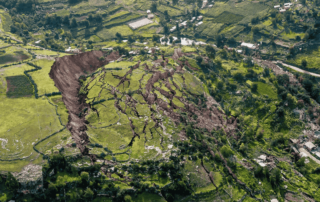
Study: Global patterns of loss of life from landslides
Global loss of life from landslides is poorly quantified.

Global loss of life from landslides is poorly quantified.
We have examined the principal attempts to simulate the effects of increased atmospheric CO2 on climate.
Storm paths in North America are likely to shift northward as a result of the jet stream changes.
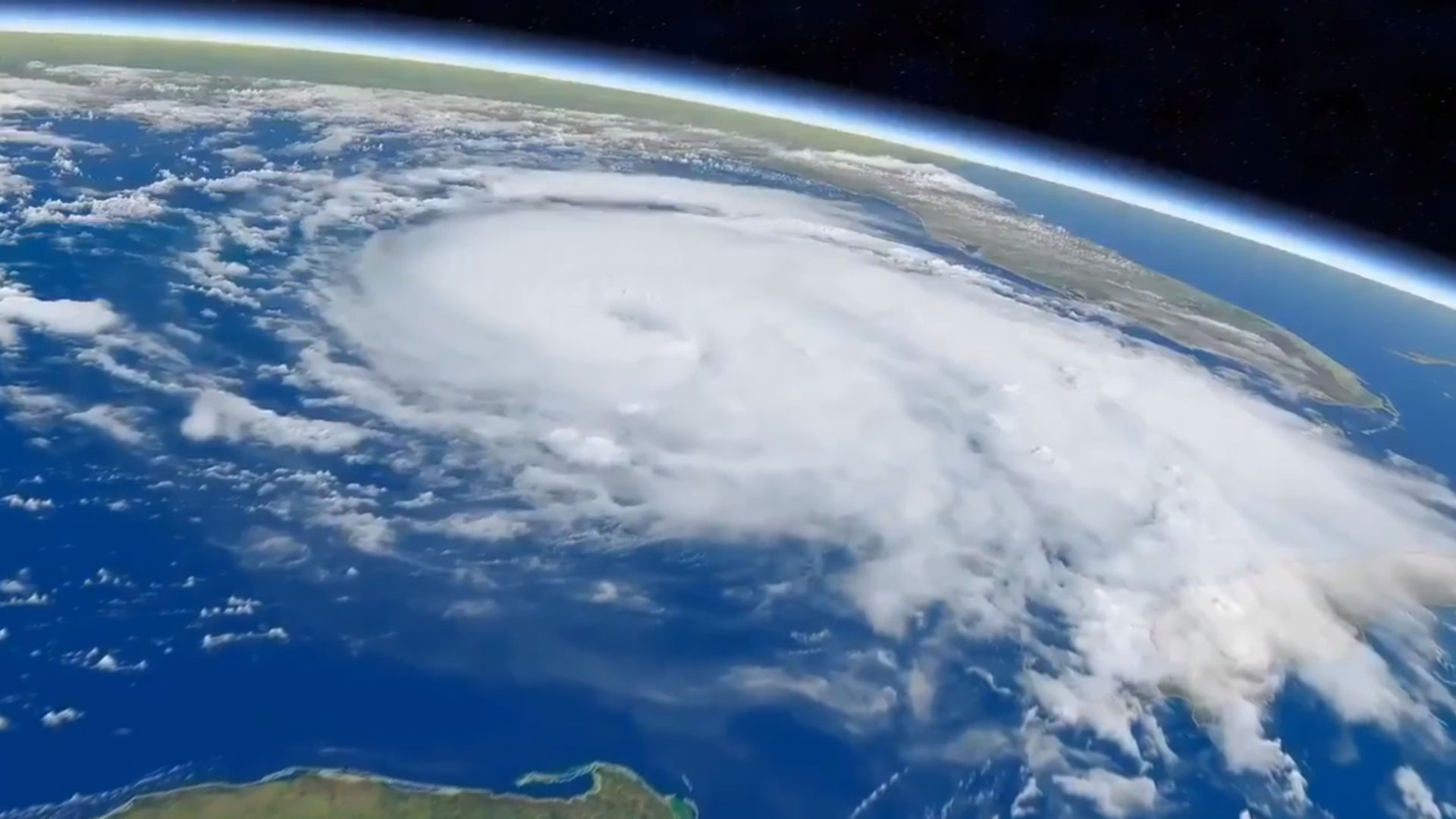
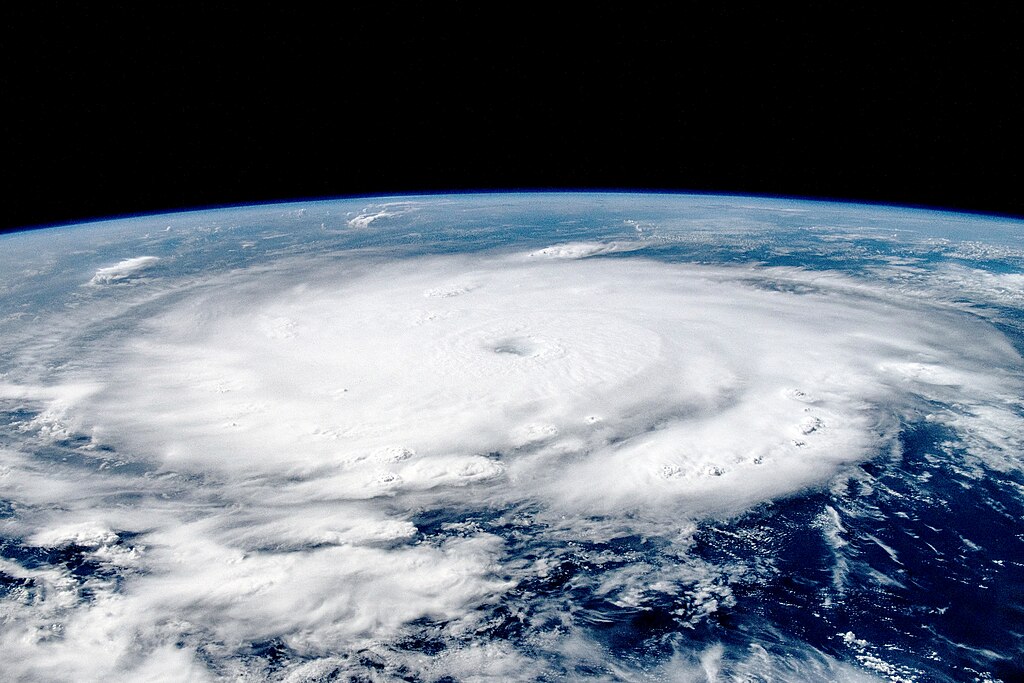
Whenever a hurricane intensifies, it appears that the ozone levels throughout the storm decrease.
Water vapor injected into the stratosphere by powerful thunderstorms converts stable forms of chlorine and bromine into free radicals capable of transforming ozone molecules into oxygen, which could in turn lead to increased ozone loss and greater levels of harmful UV radiation.
The findings suggest that such an scenario - which would redraw coastlines worldwide and unleash colossal human misery - is now a distinct possibility within the next 100 years.
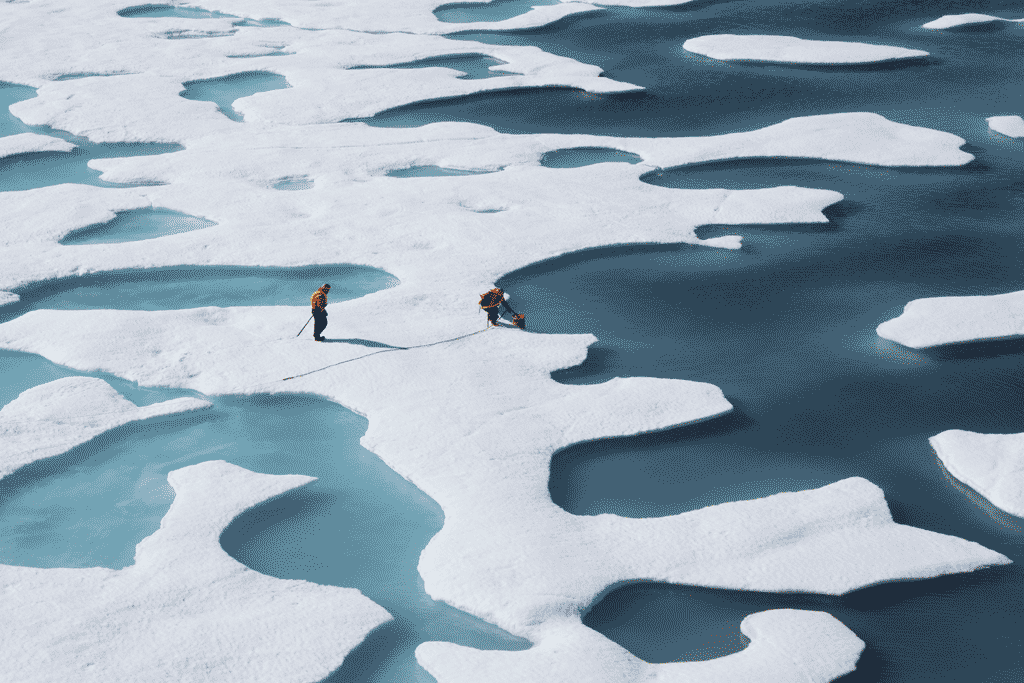
Past abrupt climate changes were probably a result of rapid and extensive variations in sea-ice cover.
The first evidence of a volcanic eruption from beneath Antarctica’s most rapidly changing ice sheet. The volcano on the West Antarctic Ice Sheet erupted 2000 years ago (325BC) and remains active.
We calculate that the sub-Antarctic hydrate inventory could be of the same order of magnitude as that of recent estimates made for Arctic permafrost.