NASA: Population and Energy Dynamics from Space
Detecting Population and Energy Usage Dynamics from Space.

Detecting Population and Energy Usage Dynamics from Space.
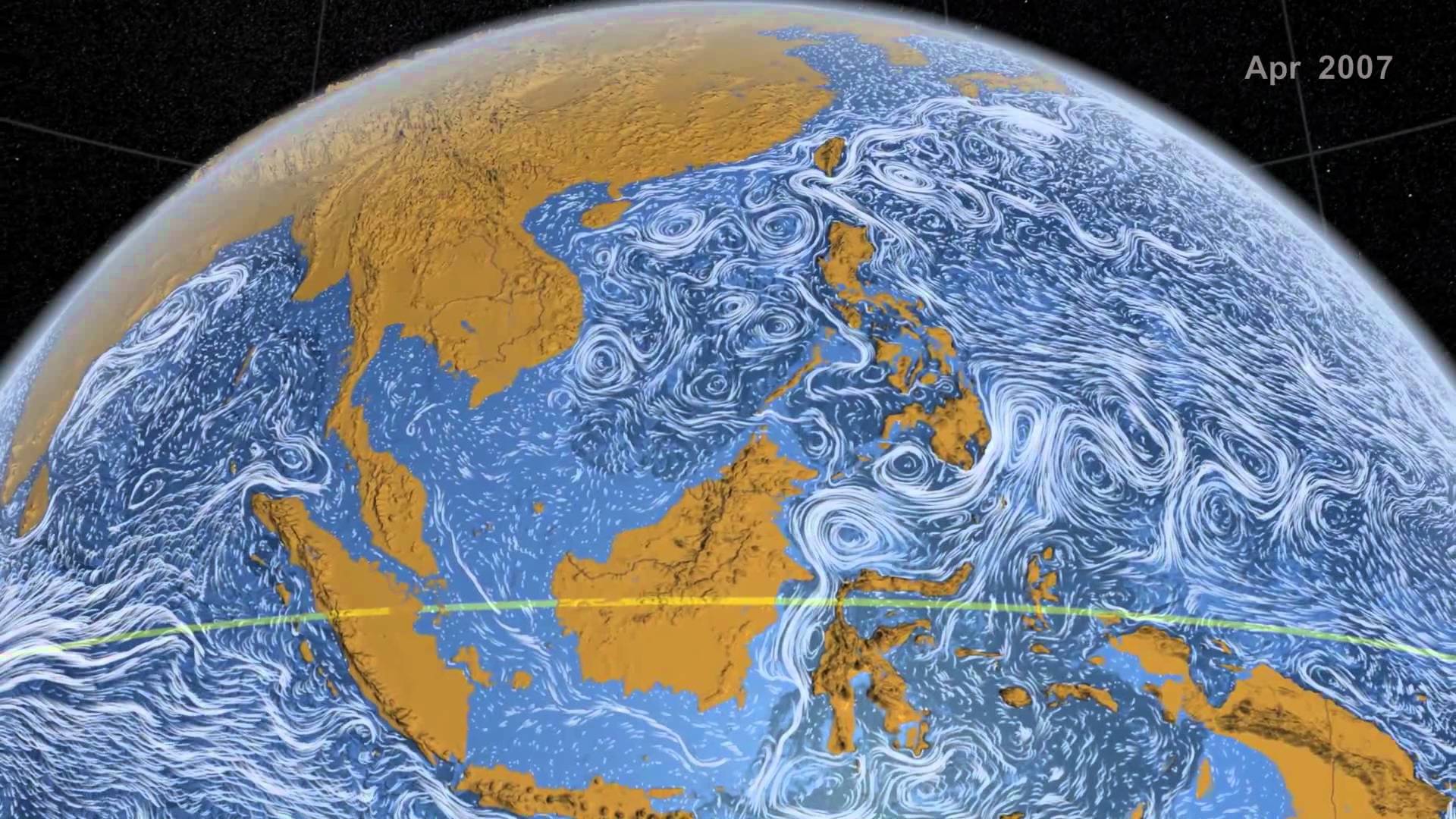
This visualization shows ocean surface currents around the world during the period from June 2005 through December 2007.
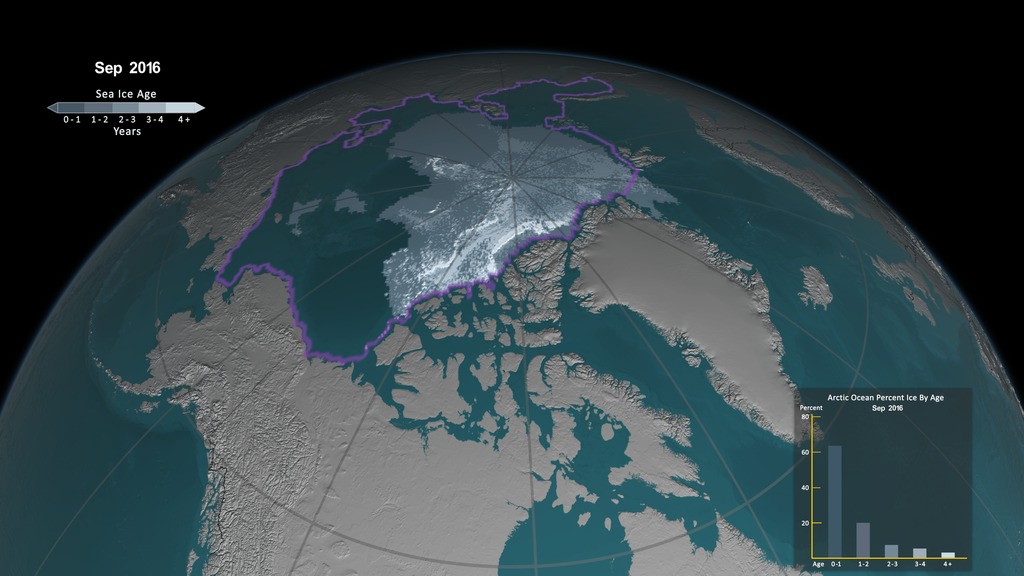
Arctic sea ice has not only been shrinking in surface area in recent years, it’s becoming younger and thinner as well. […]
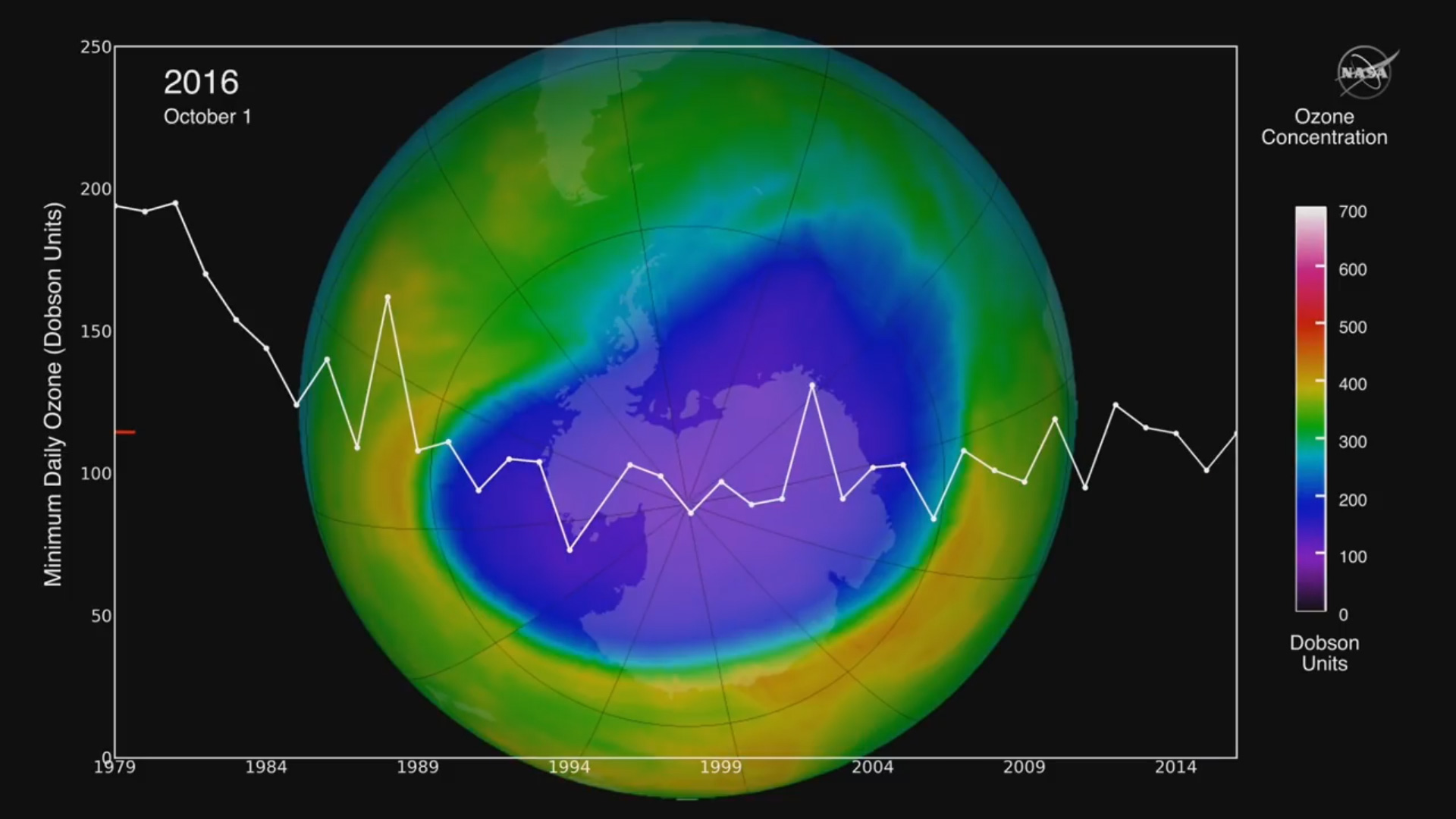
Using measurements from NASA's Aura satellite, scientists studied chlorine within the Antarctic ozone hole over the last several years, watching as the amount slowly decreased.
On how the Earth might respond to four different scenarios of how much carbon dioxide and other greenhouse gases would be emitted into the atmosphere throughout the 21st century.
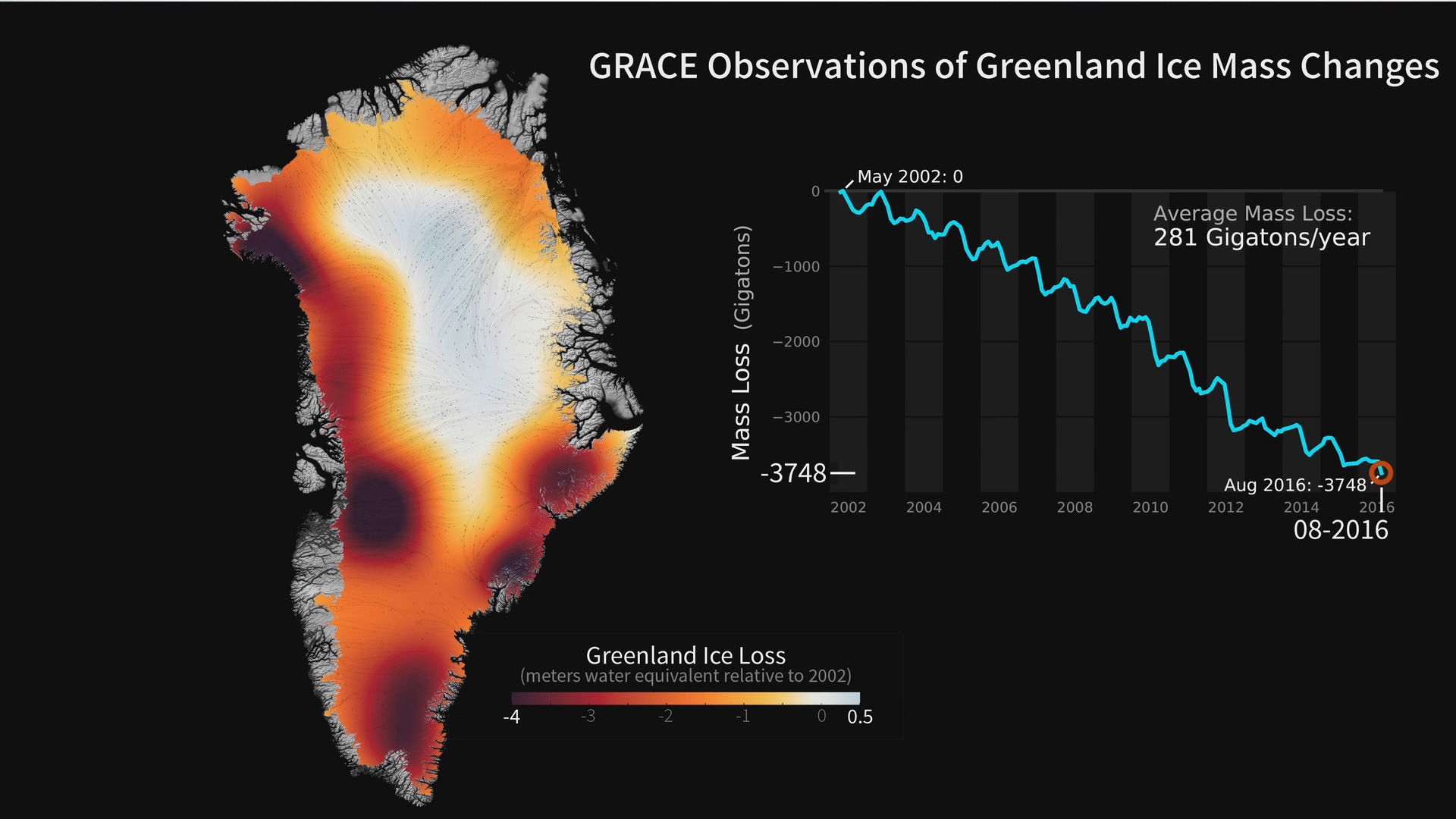
The mass of the Greenland ice sheet has rapidly declined in the last several years due to surface melting and iceberg calving.
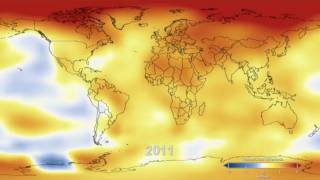
The global average surface temperature in 2011 was the ninth warmest since 1880.
The sea ice cap that covers the Arctic Ocean has been changing dramatically, especially in the last 15 years.
A class of widely used chemical coolants known as hydrofluorocarbons (HFC), found in refrigerators and in home and automobile air conditioners, contributes to ozone depletion by a small but measurable amount.