
Report: Pollution and climate change pose threat to Europe’s resources
Reuters reported, that the EU’s environmental agency stated on Monday that the natural resources that Europe depends on for its economic security are directly threatened by climate change and environmental degradation.
According to the European Environment Agency, unsustainable production and consumption, particularly in the food system, are to blame for the decline in biodiversity in Europe.
The report outlines how over 80% of protected ecosystems are in poor or bad condition as a result of pollution, invasive species, and overexploitation of natural resources. Additional, water resources are also severely strained.
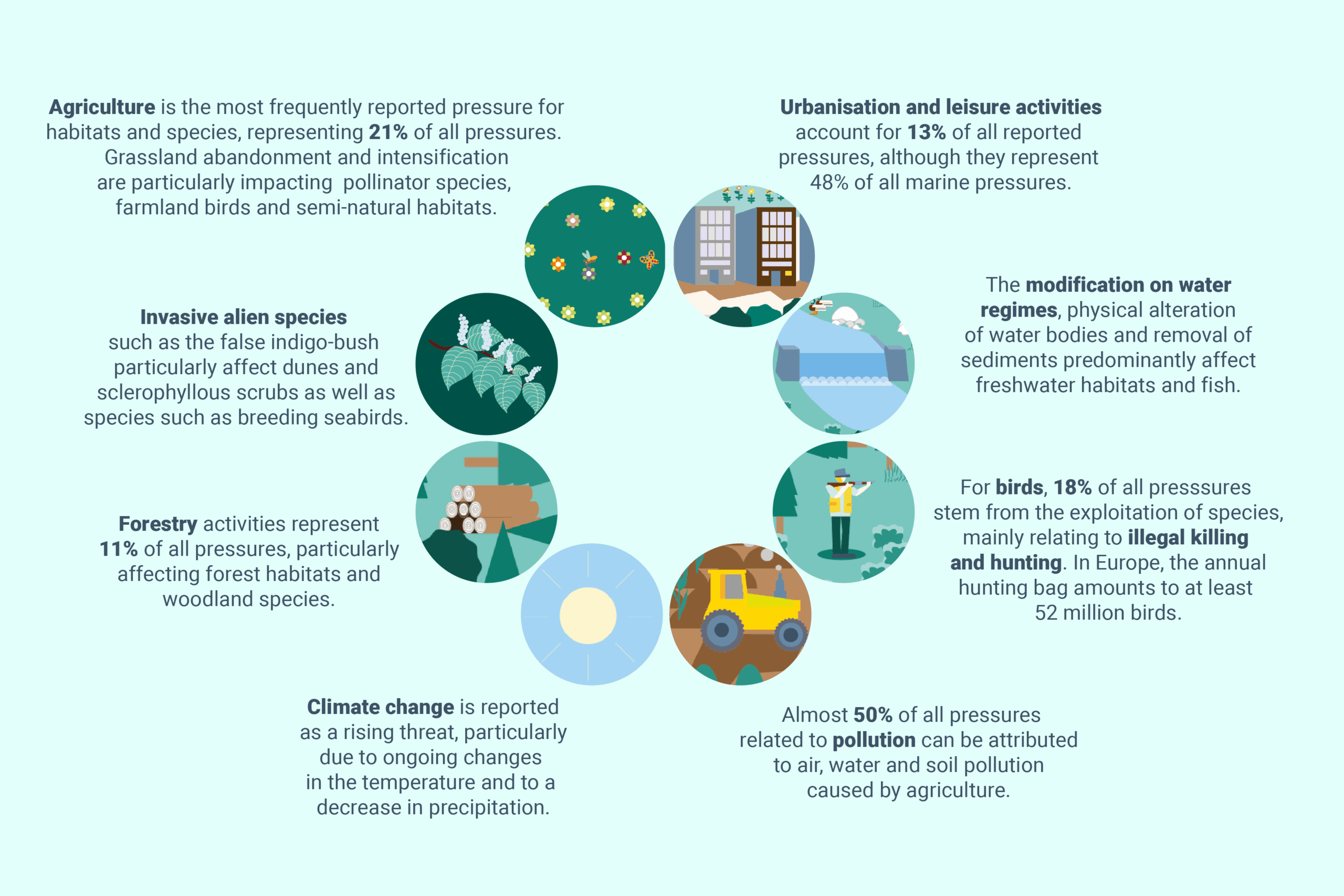
Key pressures on natural ecosystems based on Nature Directives reporting.
Europe is the fastest-warming continent
The report states: “The degradation of our natural world jeopardises the European way of life. Europe is critically dependent on natural resources for economic security, to which climate change and environmental degradation pose a direct threat.”
Droughts and other extreme weather events are getting worse in Europe, warming is at the fastest rate globally. However, discussions over EU climate targets have exacerbated the gap between richer and poorer nations, and governments are battling other issues including economic competitiveness.
Last week, EU nations announced that disagreements over the proposals among EU states will cause the group to miss a worldwide deadline to adopt new emissions-cutting targets.
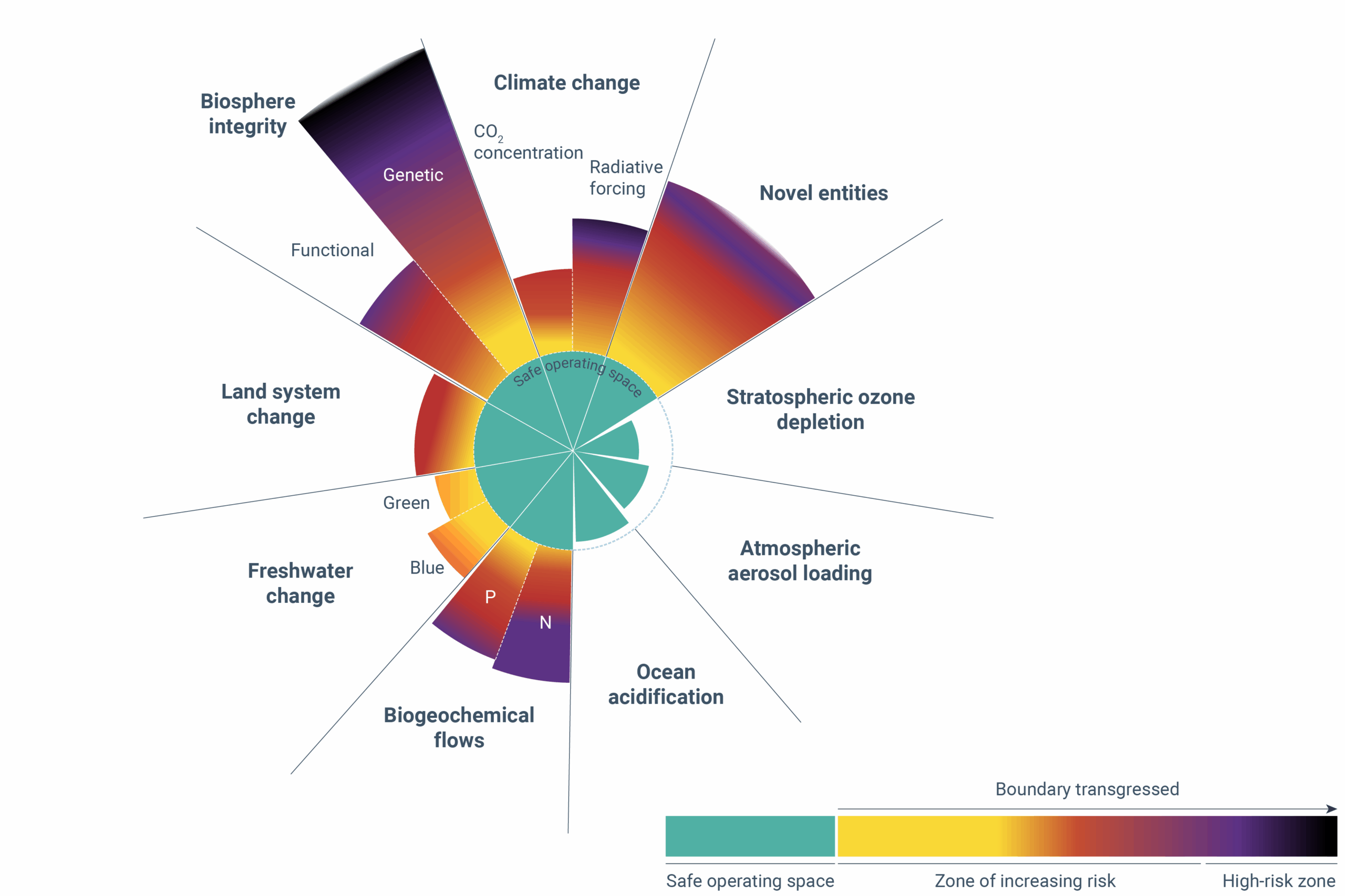
Exceedance of six of nine planetary boundaries
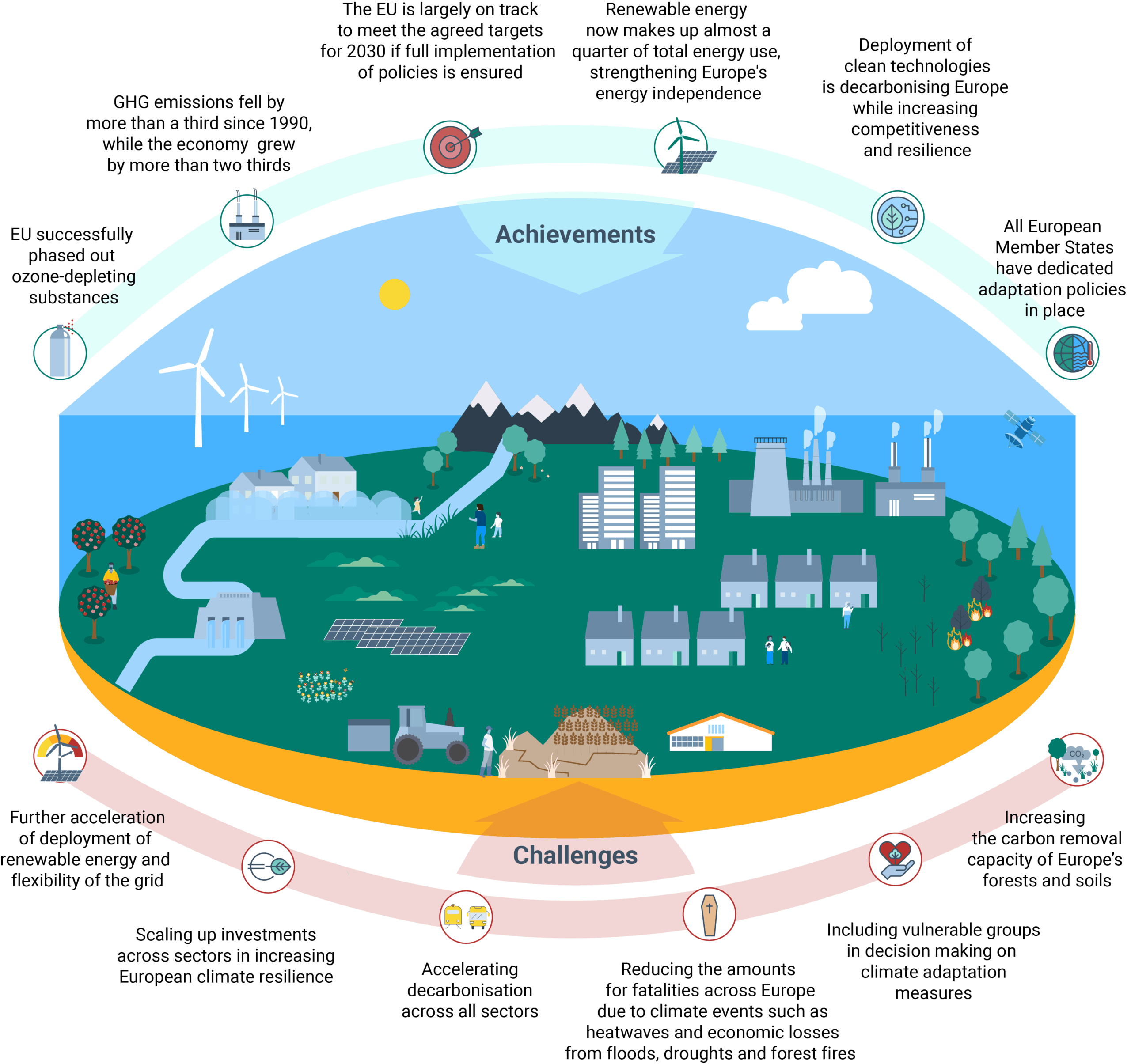
Benefits of a stable climate/risks of climate change.
Time is running out
“The window for meaningful action is narrowing, and the consequences of delay are becoming more tangible,” executive director Leena Yla-Mononen said. “We are approaching tipping points – not only in ecosystems, but also in the social and economic systems that underpin our societies.”
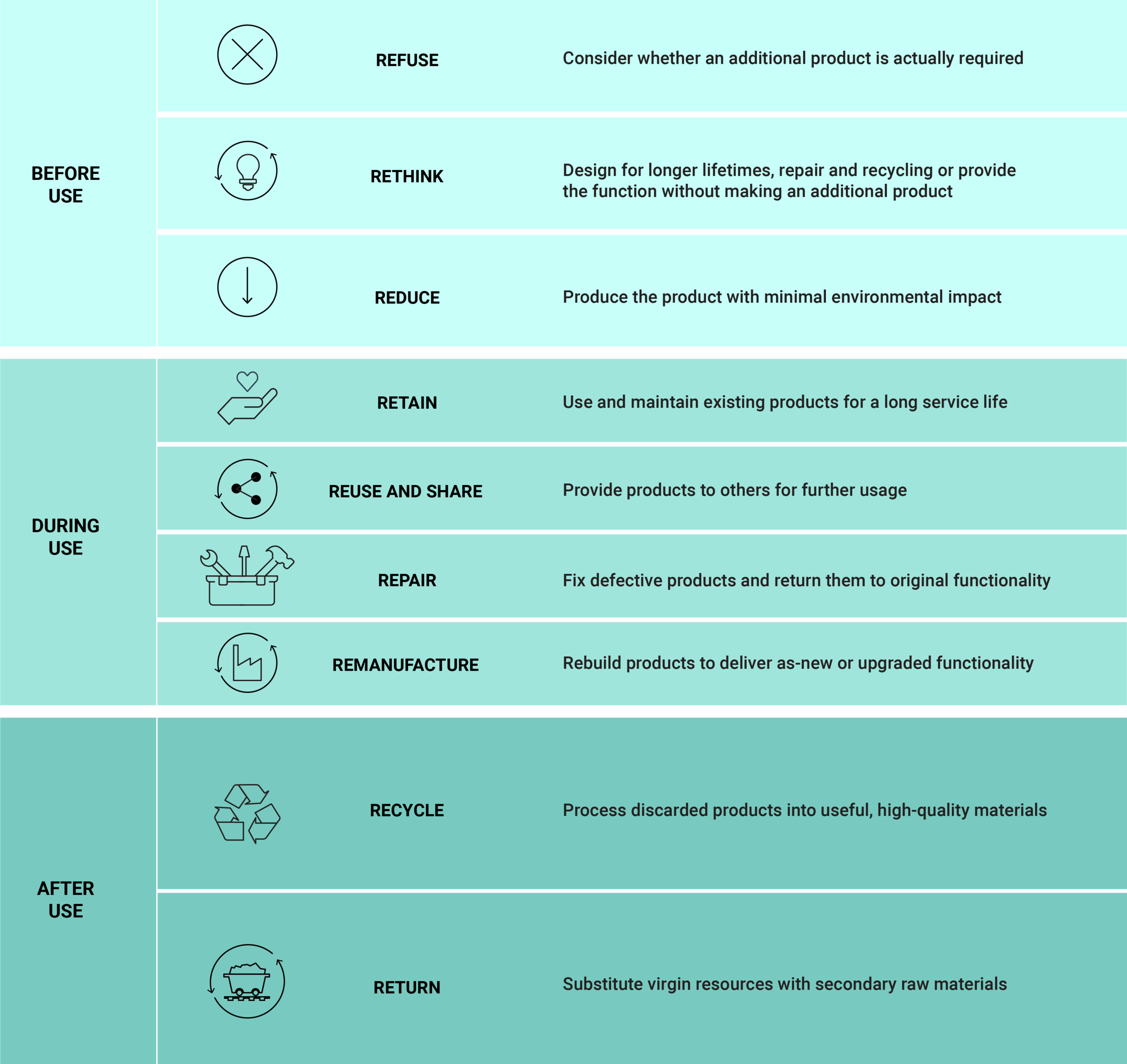
Actions for increased circularity within the product chain.
The Report
The report summary notes:
Significant progress has been made in reducing greenhouse gas emissions and air pollution, but the overall state of Europe’s environment is not good, especially its nature which continues to face degradation, overexploitation and biodiversity loss. The impacts of accelerating climate change are also an urgent challenge, according to the European Environment Agency’s (EEA) most comprehensive, ‘state of environment’ report, published today. The outlook for most environmental trends is concerning and poses major risks to Europe’s economic prosperity, security and quality of life.
The report stresses that climate change and environmental degradation pose a direct threat to Europe’s competitiveness, which depends on natural resources. It adds that achieving climate neutrality by 2050 also hinges on better and responsible management of land, water and other resources. Protecting natural resources, mitigating and adapting to climate change, and reducing pollution will build the resilience of vital societal functions that depend on nature, such as food security, drinking water and flood defences.
The report urges stepping up implementation of policies and longer-term sustainability-enabling actions already agreed to under the European Green Deal. Such actions align with the European Commission’s Competitiveness Compass priorities on innovation, decarbonisation and security.
Europe’s environment 2025 is the most comprehensive analysis on the current state and outlook for the continent’s environment, climate and sustainability, building on data from across 38 countries.
The report highlights the European Union is a world leader in climate efforts, reducing its greenhouse gas emissions and fossil fuel use while doubling the share of renewables since 2005. Good progress has also been made in improving air quality and increasing waste recycling and resource efficiency over the past 10-15 years. Progress on a range of factors that enable the shift towards sustainability – such as innovation, green employment and sustainable finance – also gives cause for hope.
EEA Executive Director, Leena Ylä-Mononen:”We cannot afford to lower our climate, environment and sustainability ambitions. Our state of environment report, co-created with 38 countries, clearly sets out the science-based knowledge and demonstrates why we need to act. In the European Union, we have the policies, the tools and the knowledge, and decades of experience in working together towards our sustainability goals. What we do today will shape our future.”
Executive Vice-President for Clean, Just and Competitive Transition, Teresa Ribera: “This report is a stark reminder that Europe must stay the course and even accelerate our climate and environmental ambitions. Recent extreme weather events show how fragile our prosperity and security become when nature is degraded, and climate impacts intensify. Delaying or postponing our climate targets would only increase costs, deepen inequalities, and weaken our resilience. Protecting nature is not a cost. It is an investment in competitiveness, resilience and the well-being of our citizens. By scaling up action now, we can build a cleaner, fairer and more resilient Europe for future generations.”
Commissioner for the Environment, Water Resilience and a Competitive Circular Economy, Jessika Roswall: “While progress has been made, the state of our environment is a clear call to action to continue to cut pollution, restore nature and protect biodiversity. We need to rethink the link between the environment and the economy and look at the protection of nature as an investment, not a cost. Healthy nature is the basis for a healthy society, a competitive economy and a resilient world, which is why the EU is committed to stay the course on our environmental commitments.”
Commissioner for Climate, Net Zero and Clean Growth, Wopke Hoekstra: “This report reinforces the urgent need for the EU to maintain its strong climate ambitions. As the fastest-warming continent, Europe has witnessed firsthand the devastating impact of climate change – most recently through the severe forest fires that swept across the summer. The costs of inaction are enormous, and climate change poses a direct threat to our competitiveness. Staying the course is essential to safeguarding our economy.”
Complex challenges ahead
Biodiversity is declining across terrestrial, freshwater and marine ecosystems in Europe due to persistent pressures driven by unsustainable production and consumption patterns, demonstrated most notably in the food system. Looking ahead, the deterioration in the state of Europe’s biodiversity and ecosystems is expected to continue, with agreed policy objectives unlikely to be met by 2030, the report says.
Similarly, Europe’s water resources are under severe pressure, with water stress affecting one third of Europe’s population and territory.
Maintaining healthy aquatic ecosystems, protecting watersheds and ensuring that groundwater resources are replenished is crucial to ensuring Europe’s future water resilience, the report says.On climate change, Europe is the fastest-warming continent on the planet. The climate is changing at an alarming rate, threatening security, public health, ecosystems, infrastructure and the economy.
The increasing frequency and magnitude of climate-related disasters, as well as the knowledge that the climate will continue to change even with the EU’s ambitious mitigation efforts, underscore the urgent need to adapt the European society and economy, while at the same time ensuring that no one is left behind.
These top challenges call for a need to rethink the links between our economy and the natural environment, land, water and natural resources, the report says. Only by restoring the natural environment in Europe will it be possible to maintain a competitive economy and a high quality of life for European citizens.
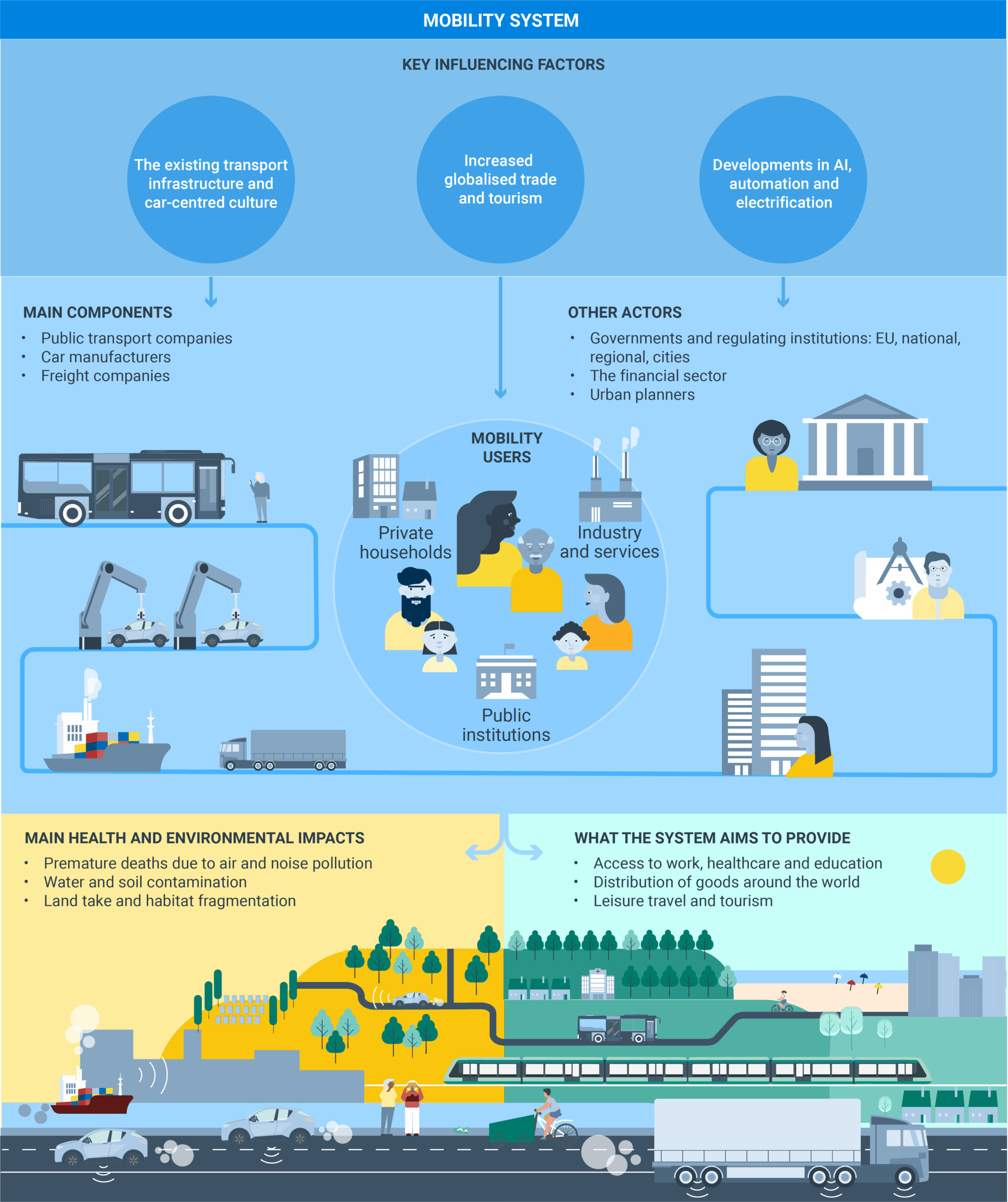
Mobility system with components, actors, employment and main health and environmental impacts.
Scaling up and out
Transformative change to production and consumption systems — decarbonising the economy, shifting towards circularity, reducing pollution and exercising responsible stewardship of natural resources — is urgently required, the report says. EU policies, including the Green Deal, provide a clear pathway towards sustainability.The report points specifically at efforts to restore habitats through nature-based solutions, which will build resilience and also help climate change mitigation and adaptation efforts. It also emphasises the need to decarbonise key economic sectors, especially transport, and to address emissions from agriculture.
Increasing circularity has the potential to reduce Europe’s dependency on imports of energy and critical raw materials. Further, investing in digital and green transition of European industry, Europe can enhance productivity and become a global leader in green innovation, developing technologies to decarbonise hard-to-abate industries like steel and cement.
Background
The EEA publishes a state of environment report every five years as mandated in its regulation. Europe’s environment 2025 is the 7th such report published by the EEA since 1995. It offers solid, science-based insights on how we must respond to the huge and complex challenges we face, such as climate change, biodiversity loss and air and water pollution.
The report has been prepared in close collaboration with the EEA’s European Environment Information and Observation Network (Eionet). The report draws on the vast expertise of Eionet’s leading experts and scientists in the environmental field, across the EEA’s 32 member countries and six cooperating countries.
Visit the official website of the European Environment Agency (EEA) Report, including more info-graphics.
About the Author: CLIMATE STATE

POPULAR
COMMENTS
- The risk with the path to a hothouse Earth | Climate State on Climate Tipping Points Existential Threat to Our Life Support Systems
- Robert Schreib on Electricity generation prices may increase by as much as 50% if only based on coal and gas
- Robert Schreib on China made a historic commitment to reduce its emissions of greenhouse gases
- Lee Nikki on COP30: Climate Summit 2025 – Intro Climate Action Event
- Hollie Bailey on Leaders doubled down on fossil fuels after promising to reduce climate pollution